
Threat actors have exploited a Salesforce email service zero-day vulnerability and abused Meta features in a sophisticated phishing campaign.
The post Salesforce Email Service Zero-Day Exploited in Phishing Campaign appeared first on SecurityWeek.




Threat actors have exploited a Salesforce email service zero-day vulnerability and abused Meta features in a sophisticated phishing campaign.
The post Salesforce Email Service Zero-Day Exploited in Phishing Campaign appeared first on SecurityWeek.

Cloud security researcher warns that stolen Microsoft signing key was more powerful and not limited to Outlook.com and Exchange Online.
The post Microsoft Cloud Hack Exposed More than Exchange, Outlook Emails appeared first on SecurityWeek.

Weekly cybersecurity news roundup that provides a summary of noteworthy stories that might have slipped under the radar for the week of July 17, 2023.
The post In Other News: Military Emails Leaked, Google Restricts Internet Access, Chinese Spyware appeared first on SecurityWeek.

Microsoft says a Chinese cyberespionage group tracked as Storm-0558 has used forged authentication tokens to access government emails.
The post Chinese Cyberspies Used Forged Authentication Tokens to Hack Government Emails appeared first on SecurityWeek.

Weekly cybersecurity news roundup that provides a summary of noteworthy stories that might have slipped under the radar for the week of July 3, 2023.
The post In Other News: Healthcare Product Flaws, Free Email Security Testing, New Attack Techniques appeared first on SecurityWeek.

A Russian hacking group has been caught hacking into Roundcube servers to spy on government institutions and military entities in Ukraine.
The post Russian APT Group Caught Hacking Roundcube Email Servers appeared first on SecurityWeek.

A credential phishing campaign using the legitimate SuperMailer newsletter distribution app has doubled in size each month since January 2023.
The post Threat Actor Abuses SuperMailer for Large-scale Phishing Campaign appeared first on SecurityWeek.
BEC scammers use residential IP addresses in attacks to make them seem locally generated and evade detection.
The post Microsoft: BEC Scammers Use Residential IPs to Evade Detection appeared first on SecurityWeek.

Google this week made client-side encryption for Gmail and Calendar available for Workspace customers.
The post Google Workspace Client-Side Encryption Now Generally Available in Gmail, Calendar appeared first on SecurityWeek.

Microsoft and cybersecurity firm Proofpoint on Tuesday warned organizations that use cloud services about a recent campaign that involved malicious OAuth applications and abuse of Microsoft’s ‘verified publisher’ status.
The campaign mainly targeted Microsoft customers in Ireland and the UK. The tech giant has taken steps to disrupt the operation and it has published an article on how users can protect against these threats, which the company calls ‘consent phishing’.
In a consent phishing attack, a threat actor attempts to trick a targeted user into granting permissions to their malicious cloud applications. Once they have obtained the required permissions, the malicious apps can gain access to legitimate cloud services and user data.
In a campaign uncovered by Proofpoint in December 2022, hackers created malicious OAuth apps and then obtained a ‘verified publisher’ status in an effort to increase their chances of tricking users.
According to Microsoft, the attackers impersonated legitimate companies when enrolling in the Microsoft Cloud Partner Program (MCPP).
“The actor used fraudulent partner accounts to add a verified publisher to OAuth app registrations they created in Azure AD,” Microsoft explained.
This made it more likely for targeted users to grant permissions to the malicious applications. These permissions included reading emails, changing email settings, and accessing files and other user data, such as calendar and meeting information.
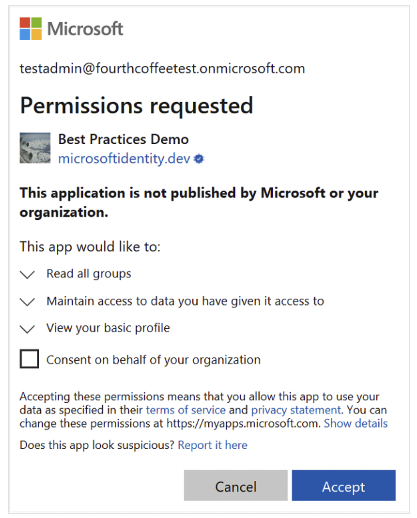
Microsoft’s investigation showed that the attackers used the malicious OAuth applications to exfiltrate emails.
According to Proofpoint, the attackers used three malicious apps created by three different publishers. They all used the same malicious infrastructure and targeted the same organizations.
“The potential impact to organizations includes compromised user accounts, data exfiltration, brand abuse of impersonated organizations, business email compromise (BEC) fraud, and mailbox abuse,” Proofpoint said. “The attack was less likely to be detected than traditional targeted phishing or brute force attacks. Organizations typically have weaker defense-in-depth controls against threat actors using verified OAuth apps.”
According to Proofpoint, the campaign ran until December 27. The security firm observed attacks against financial and marketing staff, as well as executives and managers.
Microsoft said it became aware of the campaign on December 15. The company has disabled all fraudulent applications and alerted affected customers.
Microsoft recently also dismantled a campaign that leveraged a network of single-tenant OAuth applications for the distribution of spam.
Related: GitHub Warns of Private Repositories Downloaded Using Stolen OAuth Tokens
Related: CircleCI Hacked via Malware on Employee Laptop
Related: Okta Source Code Stolen by Hackers
The post Microsoft’s Verified Publisher Status Abused in Email Theft Campaign appeared first on SecurityWeek.
Impostazioni privacy
Questo sito utilizza i cookie per migliorare la tua esperienza di navigazione su questo sito.
