US, South Korea: Ransomware Attacks Fund North Korea’s Cyber Operations

us,-south-korea:-ransomware-attacks-fund-north-korea’s-cyber-operations

The United States and South Korea have issued a joint advisory on ransomware attacks on critical infrastructure that are funding North Korea’s malicious cyber activities.

North Korean government-backed threat actors have been using ransomware in attacks against critical infrastructure for years, with at least two ransomware families attributed to them, namely Maui and H0lyGh0st.

In July last year, the US government issued a warning on North Korea’s use of Maui ransomware in attacks targeting healthcare and public health sectors.

This week, the US and South Korea issued an updated advisory, warning that North Korea is relying on ransomware attacks against healthcare and other critical infrastructure organizations to fund various objectives, including malicious cyber operations.

Typically, after compromising an organization’s network, the threat actors deploy ransomware and use it to encrypt the victim’s files. The attackers then demand a ransom to be paid in cryptocurrency in exchange for a decryption key.

“The authoring agencies assess that an unspecified amount of revenue from these cryptocurrency operations supports DPRK national-level priorities and objectives, including cyber operations targeting the United States and South Korea governments,” the alert reads.

As part of the observed ransomware operations, the North Korean threat actors build infrastructure (domains, online personas and accounts) and rely on cryptocurrency services to receive ransom proceeds that are then used to procure infrastructure for other malicious activities.

The attackers attempt to hide their identity by operating with or under third-party foreign affiliate identities, use intermediaries to receive ransom payments, and use virtual private networks (VPNs) and virtual private servers (VPSs) to hide their real IP addresses.

The threat actors have been observed exploiting known vulnerabilities for initial access, including Apache Log4j and SonicWall security bugs, but also deploying malware via trojanized files in attacks targeting small and medium-size hospitals in South Korea.

Following initial access, the attackers perform reconnaissance and lateral movement, and then deploy either custom ransomware, such as Maui and H0lyGh0st, or publicly available tools, including BitLocker, Deadbolt, Hidden Tear, Jigsaw, LockBit, Ryuk, and others.

Typically, North Korean threat actors demand from their victims a ransom in Bitcoin and communicate with them via Proton Mail email accounts.

Organizations are advised to encrypt connections with all devices on the network, implement the principle of least privilege, turn off unused network protocols and services, secure the collection, transfer and storing of personally identifiable and protected healthcare information (PII and PHI), implement multi-layer network segmentation, and monitor networks for suspicious behavior.

Furthermore, organizations should keep isolated data backups, should implement a cyber incident response plan, should keep all applications and operating systems updated, enforce strong passwords and multi-factor authentication, educate employees and users on phishing, and make sure that all remote desktop protocol (RDP) and similar connections are monitored and secured.

Related: US Disrupts North Korean Hackers That Targeted Hospitals

Related: US Healthcare Organizations Warned of ‘Daixin Team’ Ransomware Attacks

Related: US Says Chinese Military Behind Vast Aerial Spy Program

The post US, South Korea: Ransomware Attacks Fund North Korea’s Cyber Operations appeared first on SecurityWeek.

GoAnywhere MFT Zero-Day Exploitation Linked to Ransomware Attacks

goanywhere-mft-zero-day-exploitation-linked-to-ransomware-attacks

The recent exploitation of a zero-day vulnerability in the GoAnywhere managed file transfer (MFT) software has been linked by a cybersecurity firm to a known cybercrime group that has likely attempted to exploit the flaw in a ransomware attack. 

On February 1, Fortra alerted GoAnywhere MFT users about a zero-day remote code injection exploit. The vendor immediately provided indicators of compromise (IoCs) and mitigations, but released a patch only a week later. 

Users, particularly those who are running an admin portal that is exposed to the internet, have been instructed to urgently install the patch. 

There appear to be more than 1,000 internet-exposed instances of GoAnywhere. However, according to the vendor, exploitation requires access to the application’s admin console, and at least some of the exposed instances are associated with the product’s web client interface, which is not impacted. 

No information was made available about the attacks exploiting the vulnerability, but managed endpoint detection and response firm Huntress reported this week that these attacks may have been conducted by a known cybercrime group. The company reached the conclusion after analyzing an attack detected in a customer environment on February 2.

Huntress has linked the attack to a malware family named Truebot, which was previously associated with a Russian-speaking threat actor named Silence. This group has also been linked to TA505, a threat group known for distributing the notorious Cl0p ransomware

“Based on observed actions and previous reporting, we can conclude with moderate confidence that the activity Huntress observed was intended to deploy ransomware, with potentially additional opportunistic exploitation of GoAnywhere MFT taking place for the same purpose,” Huntress said in a blog post.

Cybersecurity firm Rapid7 has analyzed the vulnerability and assigned it the CVE identifier CVE-2023-0669. While the product does not belong to Rapid7, the company is a CVE Numbering Authority and it can assign CVEs to flaws found in the products of other vendors. 

Related: Patch Tuesday: Microsoft Plugs Windows Hole Exploited in Ransomware Attacks

Related: Decade-Old Adobe ColdFusion Vulnerabilities Exploited by Ransomware Gang

Related: PetitPotam Vulnerability Exploited in Ransomware Attacks

The post GoAnywhere MFT Zero-Day Exploitation Linked to Ransomware Attacks appeared first on SecurityWeek.

ESXiArgs Ransomware Hits Over 3,800 Servers as Hackers Continue Improving Malware

esxiargs-ransomware-hits-over-3,800-servers-as-hackers-continue-improving-malware

There have been some new developments in the case of the ESXiArgs ransomware attacks, including related to the encryption method used by the malware, victims, and the vulnerability exploited by the hackers.

After the US Cybersecurity and Infrastructure Security Agency (CISA) announced the availability of an open source tool designed to help some victims of the ESXiArgs ransomware recover their files without paying a ransom, the FBI and CISA released a document providing recovery guidance.

The FBI and CISA are aware of more than 3,800 servers that were compromised around the world in ESXiArgs ransomware attacks. 

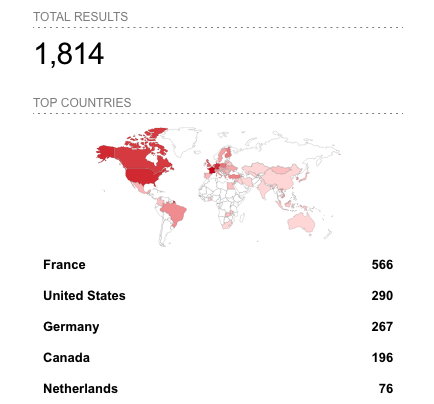
Currently, the Shodan and Censys search engines show 1,600-1,800 hacked servers, but there is indication that many impacted organizations have started responding to the attack and cleaning up their systems.

Reuters has conducted an analysis and determined that the victims include Florida’s Supreme Court and universities in the United States and Europe.

An analysis of the file-encrypting malware deployed in the ESXiArgs attacks showed that it has targeted files associated with virtual machines (VMs). However, experts noticed that the ransomware mainly targeted VM configuration files, but did not encrypt the flat files that store data, allowing some users to recover their data.

The tool released by the US government reconstructs the encrypted configuration files based on the unencrypted flat files. 

However, Bleeping Computer reported on Wednesday that some victims have been targeted with a new version of the ESXiArgs malware, one with a different encryption process that involves encrypting more data, which prevents the recovery of files. 

Until now, the ransomware did not encrypt the majority of data in large files, but the new version of the malware encrypts a far more significant amount of data in large files. Up until now, researchers have not found any flaws in the actual encryption, making it impossible to restore encrypted files.

It has been assumed that the ESXiArgs attacks leverage CVE-2021-21974 for initial access. This is a high-severity remote code execution vulnerability in VMware ESXi that VMware patched in February 2021. The issue is related to OpenSLP.

VMware has not confirmed exploitation of CVE-2021-21974, but it did say that there is no evidence of a zero-day vulnerability being leveraged in the attacks.

However, threat intelligence company GreyNoise is not convinced that there is enough evidence that CVE-2021-21974 is being exploited. GreyNoise pointed out that several OpenSLP-related vulnerabilities have been found in ESXi in recent years, and any of them could have been exploited in the ESXiArgs attacks, including CVE-2020-3992 and CVE-2019-5544

Data collected by cloud security company Wiz showed that, as of February 7, 12% of ESXi servers were unpatched against CVE-2021-21974 and vulnerable to attacks. 

The attacks have yet to be attributed to a known threat actor, but the evidence collected so far suggests that the file-encrypting malware is based on Babuk source code that was leaked in 2021. 

“Due to the relatively low ransom demand (2 BTC) and widespread, opportunistic targeting, we assess with moderate confidence this campaign is not tied to ransomware groups known for ‘Big Game Hunting’,” said SOC-as-a-service provider Arctic Wolf. “More established ransomware groups typically conduct OSINT on potential victims before conducting an intrusion and set the ransom payment based on perceived value.”

Related: VMware Patches VM Escape Flaw Exploited at Geekpwn Event

Related: VMware Confirms Exploit Code Released for Critical vRealize Logging Vulnerabilities

The post ESXiArgs Ransomware Hits Over 3,800 Servers as Hackers Continue Improving Malware appeared first on SecurityWeek.

Russian Admits in US Court to Laundering Money for Ryuk Ransomware Gang

russian-admits-in-us-court-to-laundering-money-for-ryuk-ransomware-gang

Denis Mihaqlovic Dubnikov, of Russia, has admitted in a United States court to laundering cryptocurrency for the Ryuk ransomware gang.

Ryuk is a file-encrypting ransomware that emerged in 2018 and which was operated by the same cybercriminals as the Trickbot botnet.

In early 2021, security researchers estimated the Ryuk operation to be worth over $150 million. Ryuk was then replaced in attacks by the Conti ransomware.

According to court documents, between August 2018 and August 2021, Dubnikov, now 30, laundered the proceeds of Ryuk ransomware attacks on entities in the US and elsewhere.

In a typical ransomware attack, cybercriminals breach the systems of individuals or organizations, deploy the file-encrypting malware, and use it to render data on the infected systems unusable. The victim is usually instructed to pay a ransom in exchange for a decryption key.

Dubnikov, who was arrested in the Netherlands in November 2021 and extradited to the US in August 2022, engaged in various financial transactions to conceal the source and ownership of ransom proceeds from Ryuk attacks.

Following one ransomware attack, a US-based company paid a 250 Bitcoin ransom to Ryuk threat actors, who then transferred 35 Bitcoin to Dubnikov, in exchange for approximately $400,000.

Dubnikov then converted the Bitcoin to Tether and sent it to another co-conspirator, who exchanged it for Chinese Renminbi. Dubnikov’s co-conspirators laundered additional funds from the ransom payment.

According to court documents, Dubnikov received financial compensation for his role in the scheme.

Dubnikov has pleaded guilty to one count of conspiracy to commit money laundering and he faces up to 20 years in prison and a $500,000 fine. He is scheduled for sentencing on April 11, 2023.

Related: Former Ubiquiti Employee Who Posed as Hacker Pleads Guilty

Related: Canadian NetWalker Ransomware Affiliate Pleads Guilty in US

Related: Nigerian Admits in US Court to Hacking Payroll Company

The post Russian Admits in US Court to Laundering Money for Ryuk Ransomware Gang appeared first on SecurityWeek.